Last updated
SOLUTION 05
REGULATORY & SOVEREIGNTY CONTROLS
Compliance by architecture embeds regulatory and data sovereignty controls into the systems that move and store data, rather than documenting them after the fact. CCA enforces classification, encryption and key sovereignty consistently across legacy, hybrid and cloud environments, producing continuous, auditable evidence of control instead of point-in-time attestations that go stale.
Trapped Between Two Undesirable Choices
Documentation Drifts. Remediation Comes Too Late.
The choice: Manual, Document-Led Compliance
What it means: Rely on spreadsheets, policies and periodic reviews that go stale the moment they’re signed off.
Why it fails
Manual, Document-Based Compliance
- Point-in-time evidence goes stale almost immediately
- Relies on manual, error-prone data classification
- Hard to prove control effectiveness between audits
- Continuous manual review is slow and costly to sustain
The choice: Reactive Remediation
What it means: Wait for an audit or incident to surface a gap, then scramble to fix it after the exposure has already occurred.
Why it fails
Reactive Remediation
- Gaps are found only after exposure has occurred
- Regulatory and reputational risk sits open in the meantime
- Sovereignty of encryption keys is often unclear
- Difficult to prove consistent enforcement across hybrid estates
A Compliance-by-Architecture Strategy
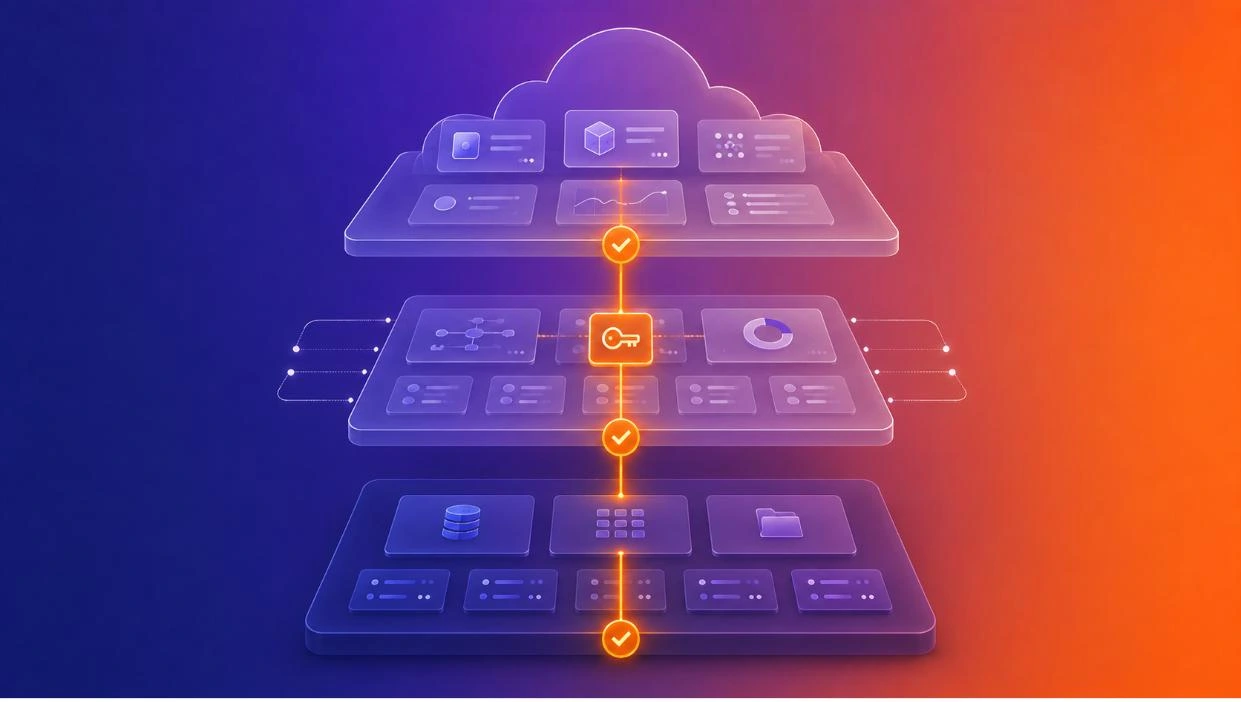
CCA and OpenText combine discovery, classification and protection so compliance is enforced continuously across every environment - not assembled after the fact.
Compliance Embedded, Not Bolted On
Structured data is discovered and classified automatically, so nothing sensitive goes ungoverned.
Encryption and access policy are enforced consistently across mainframe, distributed and cloud platforms.
Significantly Reduces Regulatory Exposure
- Aligns to APRA CPS 234, PCI DSS, GDPR and the Privacy Act
- Supports sovereign key management on-prem, cloud or hybrid
- Provides end-to-end audit traceability across environments
- Reduces the sensitive data footprint through protection-by-design

Continuous Compliance, End to End
Discovery, classification and protection enforced consistently across every environment.
Discover & Classify
Structured data across the estate
Protect & Govern
Encryption, keys, policy
Audit-Ready
Continuous, provable assurance
Purpose-Built Components, Working as One
Rocket Data Replicate and Sync (RDRS)
Real-time change data capture and synchronisation across legacy and modern environments, as changes occur.
OpenText Voltage SecureData
Encryption, format-preserving encryption, tokenisation and policy-driven controls - without impacting usability.
CCA Secure Data Connector
Integrates real-time replication with protection services so sensitive data stays protected throughout synchronisation.
OpenText Voltage Data Security Platform (DSP)
Discovers and automatically classifies structured data assets - what exists, where it resides, and how it should be governed.
What the Solution Delivers
Automated Discovery & Classification
Identifies sensitive structured data across legacy and modern platforms.
Sovereign Key Management
Keeps encryption keys under organisational control - on-prem, cloud or hybrid.
End-to-End Audit Traceability
Provides clear lineage and evidence of control across structured and unstructured data.
Continuous Policy Enforcement
Applies consistent governance rules across every platform, all the time.
Outcomes That Matter to the Business
Demonstrate Compliance Continuously, Not Periodically
Strengthen Board-Level Assurance
Reduce Regulatory Scope & Exposure
Maintain Sovereignty Over Encryption Keys
Modernise Without Compliance Risk
Frequently asked questions
What is compliance by architecture?
It means embedding regulatory and data sovereignty controls into the systems that move and store data, rather than documenting them after the fact. Discovery, classification and protection are enforced continuously across every environment.
Why is policy documentation not enough?
Documentation drifts the moment it is signed off, and remediation comes too late. Point-in-time evidence goes stale almost immediately, data classification is manual and error-prone, it is hard to prove control effectiveness between audits, and continuous manual review is slow and costly to sustain.
How is sovereignty maintained over encryption keys?
Encryption keys stay under organisational control, whether that is on-premise, in the cloud or hybrid, so control over sensitive data is not delegated to the platform hosting it.
Which environments does it cover?
Encryption and access policy are enforced consistently across mainframe, distributed and cloud platforms. Structured data is discovered and classified automatically across legacy and modern systems, so nothing sensitive goes ungoverned.
What evidence does it give us for auditors?
Clear lineage and evidence of control across structured data, providing continuous, provable assurance rather than point-in-time documentation assembled ahead of an audit.
Which components enforce compliance?
OpenText Voltage Data Security Platform handles discovery and classification, Rocket Data Replicate and Sync moves data as it changes, OpenText Voltage SecureData applies encryption and policy-driven controls, and CCA Secure Data Connector keeps protection in place throughout synchronisation.
Turn compliance into an architectural guarantee.
Talk to a consultant about embedding sovereignty and audit-readiness into your data estate.
Talk to a consultant